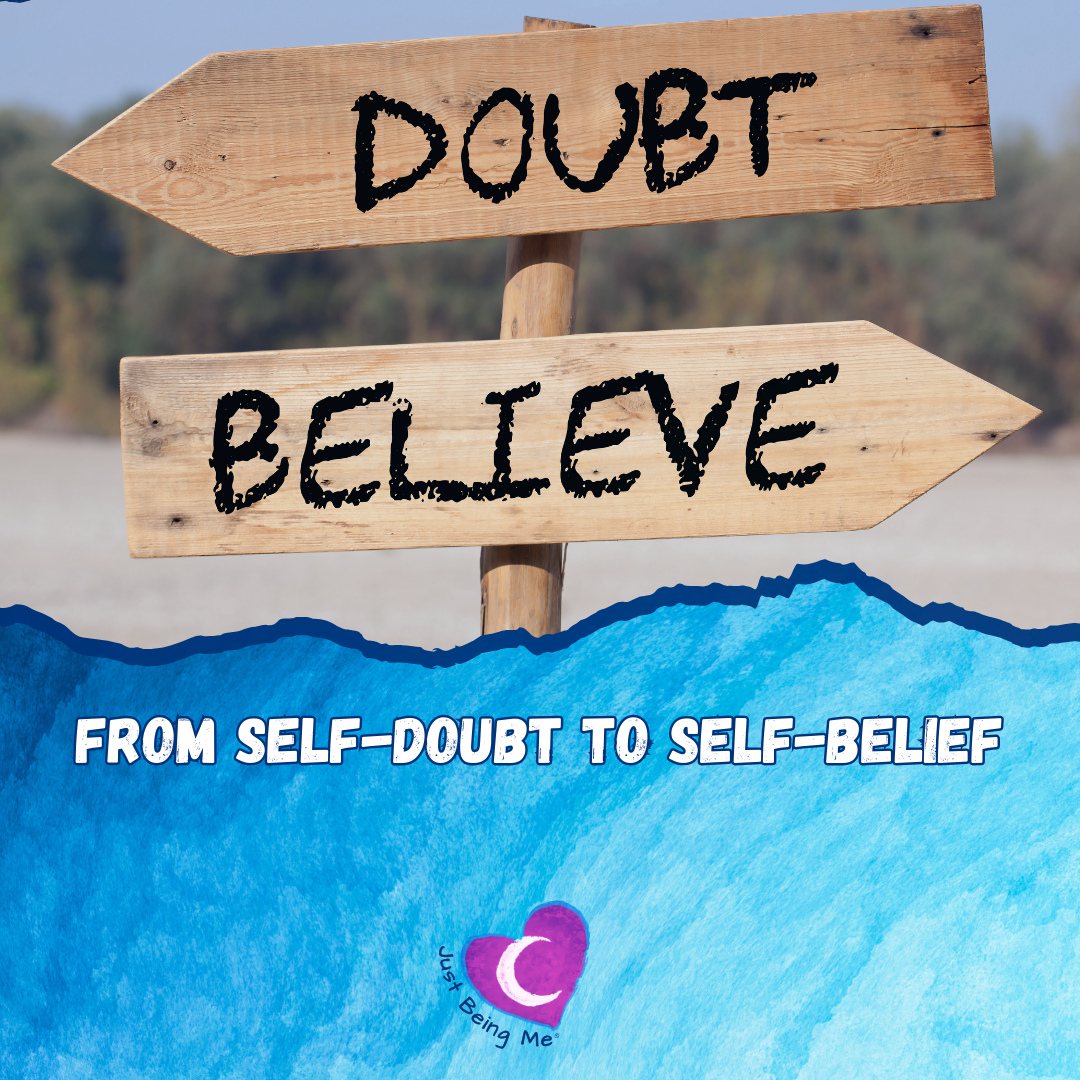
From Self-Doubt to Self-Belief
Self-doubt is something we all experience. It’s that inner voice that questions everything you do, the one that whispers that you’re not good enough. It shows up when you want to try something new or when you finally start to believe in yourself and it quietly asks, “Who do you think you are?”
If that sounds familiar, you’re not alone. And more importantly, you’re not broken.
Understanding Self-Doubt
Self-doubt doesn’t mean there’s something wrong with you. It means you’re human.
Most people don’t understand that self-doubt is learned. It’s what happens when you’ve been criticised, dismissed, or made to feel like your feelings don’t matter. Over time, your brain learns that staying small feels safer than standing out.
It starts as protection. But it ends up becoming the prison that keeps you from growing.
The good news is this: what was learned can be unlearned.
The Voice in Your Head
Self-doubt shows up as the voice that questions you.
“Are you sure?”
“What if you fail?”
“Who do you think you are?”
But that voice isn’t the truth. It’s fear pretending to keep you safe.
When you begin to challenge that voice, your brain starts to rewire. Instead of letting fear take the lead, you start leading with curiosity.
The next time doubt appears, pause. Ask yourself, “Is this true now, or are these old thoughts?”
That one question gives your brain space to choose a different response. It allows you to see that your fear is based on old stories, not your current reality.
Building Self-Belief
Self-belief doesn’t come from what other people think of you. It comes from within.
It grows every time you honour your truth, follow through on a promise, or treat yourself with compassion. It’s built through the small moments when you show up for yourself, even when nobody’s watching.
When you practise self-talk that supports you instead of shames you, you begin to reprogram your mind.
Try replacing old phrases with ones that build you up:
- Instead of “I can’t,” say “I’m learning.”
- Instead of “I’m not ready,” say “I’m practising.”
- Instead of “I always fail,” say “I’m finding my way.”
Your brain listens to the words you use. Speak to yourself as someone you care about.
Reconnecting with Trust
Confidence isn’t the absence of doubt. It’s the presence of trust.
When you trust yourself, you don’t need certainty - you just need courage.
You’ll still have doubts, but they won’t control you anymore. You’ll notice them, breathe through them and move forward anyway.
This is where emotional responsibility comes in. When you stop blaming others or waiting for validation, you take your power back. You stop being a passenger in your own life.
Self-belief isn’t about never falling. It’s about trusting yourself to stand back up.
The Energy of Belief
Everything is energy.
When you believe in yourself, you change the frequency of how you show up. People feel that. Opportunities respond to that.
When you’re stuck in low energy — doubting, overthinking, seeking approval — you close off possibilities. But when you shift into self-belief, even quietly, life begins to open again.
That doesn’t mean everything becomes easy. It means you finally start moving in alignment with your truth instead of your fear.
A Closing Reflection
Take a deep breath.
Ask yourself, what would change in my life if I trusted myself just a little bit more?
Maybe you’d speak up.
Maybe you’d try something new.
Maybe you’d finally stop waiting for permission to live fully.
You are not broken. You are becoming.
Self-belief isn’t something you find. It’s something you choose, again and again.
If this speaks to you, my 121 Self-Belief Coaching and Learning to Love Myself Membership are both safe spaces where you can begin to rebuild that trust. Together, we quiet the noise of self-doubt, reprogram old patterns and reconnect you with the confidence that’s already within you.
You can find out more at jennyfield.co.uk.
Because change begins when you say yes to yourself.