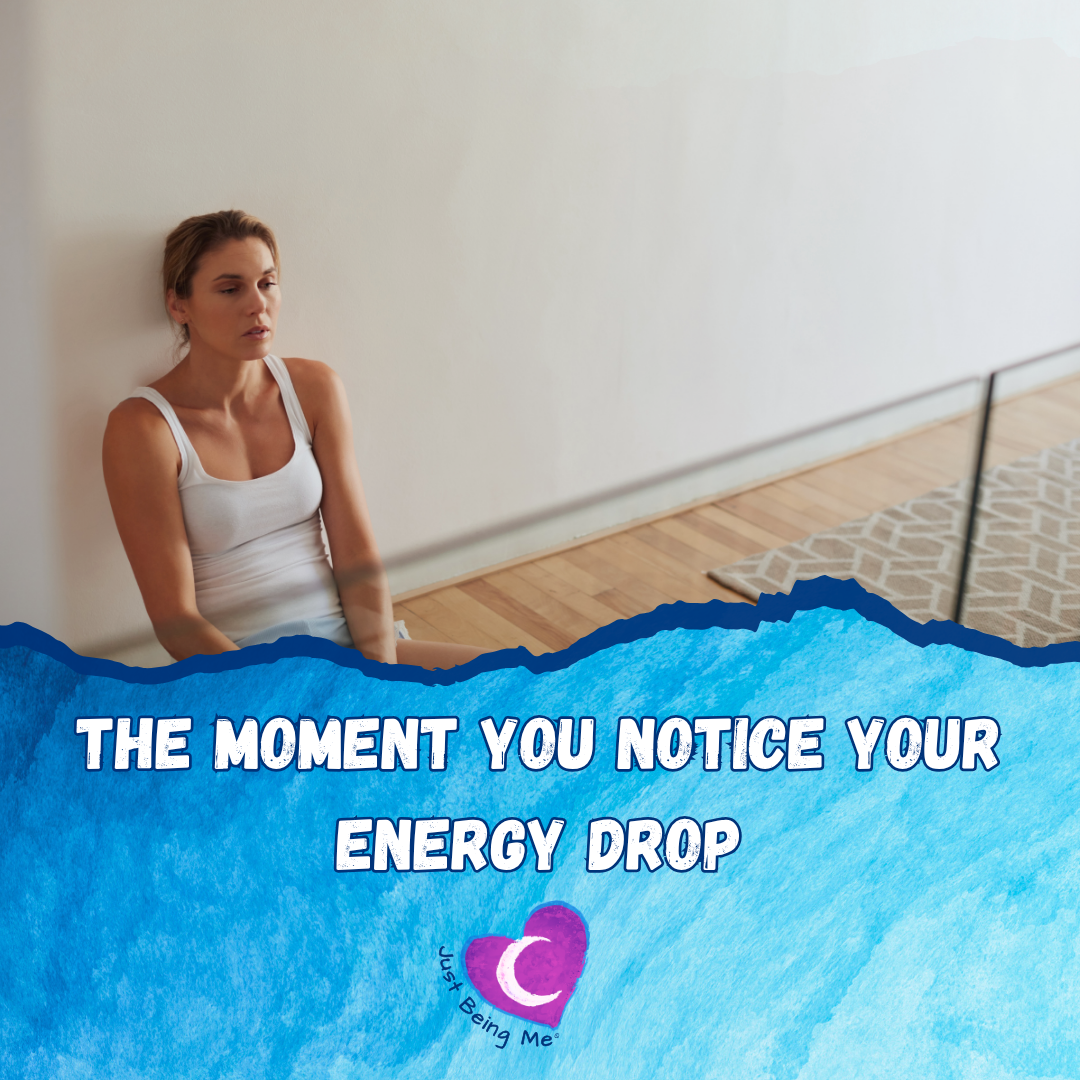
The Moment You Notice Your Energy Drop
Once people begin recognising how often they step into situations another moment becomes easier to see. It is the moment just before they get involved.
Most people assume their actions happen automatically. Something appears in front of them and they respond without thinking about it. That can certainly feel true at the time because the response arrives so quickly.
But when you start slowing these moments down you often notice something else happening first. A thought appears.
It might be something simple like “I should deal with this.” It might be “I know how to fix that.” Sometimes it is “I’ll just sort it.” The words themselves may vary but the meaning behind them is usually the same. You see a situation and immediately assume that it is yours to improve.
That thought can appear so quickly that it barely registers. By the time you notice it you may already be halfway into solving the problem.
This is one of the reasons people often miss how much energy they are using. They believe they are simply responding to what is happening around them. What they don’t always see is the moment where they decided the situation belonged to them.
For years I didn’t notice that moment at all.
I would see something that needed doing and my mind would already be moving towards the solution. If someone was struggling I assumed I should help. If something looked like it could be improved I assumed I should deal with it. That reaction felt so normal that it never occurred to me to question it. It simply felt like being responsible.
But once I began paying attention to my energy something became clearer. The moment I started feeling drained often came long before I had actually done anything. It arrived with the thought.
The moment my mind decided “I should deal with this” my attention and energy had already moved towards the situation. I was already thinking about what needed to happen next. I was already working out how to improve it.
The action might only take a few minutes but the mental involvement often began much earlier. That is why this pattern can be so exhausting over time.
Your energy isn’t only used when you physically do something. It is also used when you start thinking about it, analysing it and working out how to solve it. When that process repeats itself many times throughout the day it becomes tiring even if the tasks themselves seem small.
Most people don’t recognise that connection straight away. They only notice the tiredness later. They reach the end of the day and feel drained without being able to clearly explain why. They know they have been busy but the level of exhaustion often feels greater than the amount of work would suggest.
When you start noticing that early thought something interesting begins to happen.
You realise that the thought itself is not a command. It is simply a suggestion your mind is offering based on patterns you have followed for years.
If you have spent a long time being the reliable one your mind will naturally suggest involvement. If you are used to fixing things your mind will naturally move towards solutions.
But recognising the thought creates a small amount of space. Instead of immediately acting on it you can begin to see it. You can notice the moment your mind says “I should deal with this.” You can recognise the familiar pull to step in. And once you see that clearly something else becomes possible. You can pause.
That pause does not mean you ignore situations or stop helping people completely. It simply means the thought is no longer the same thing as a decision. You can see the suggestion and then decide whether the situation actually needs your involvement. That difference may sound small but it changes a lot.
Because once you start noticing that moment you begin to see how often it appears. You begin to recognise the number of situations your mind immediately claims as yours to fix and that is often where people realise just how much of their energy has been quietly used throughout the day.
Recognising the thought doesn’t immediately change the behaviour. At first you may still step in many times out of habit. But now you are seeing the pattern while it happens rather than only noticing the tiredness afterwards. That awareness is important because it is the beginning of choice. The thought may still appear. But now it doesn’t automatically decide what you do next.
In the next blog we are going to look at what happens once that pause begins to appear and how protecting your energy sometimes means allowing situations to continue without stepping in to improve them.