
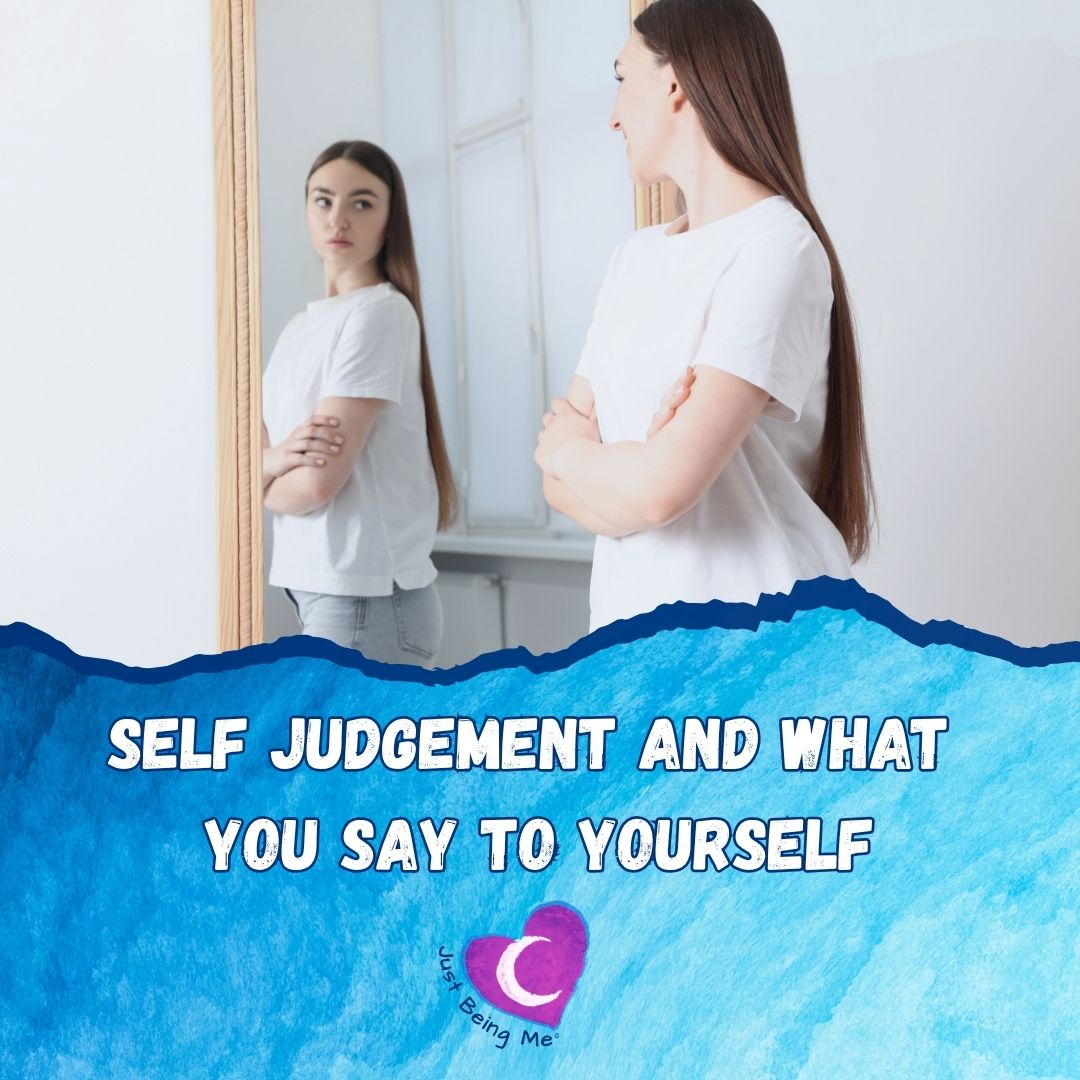
Self Judgement and What You Say to Yourself
You know when you send a message and then read it back three times. Not because you’ve made a spelling mistake or because it doesn’t make sense, but because you’re now wondering if it sounded too blunt, too needy, too much, too long, too short or whether they’ll understand it the way you meant it.
Or you leave the conversation and later on your head is right back there, thinking about what you said, what their face did, whether they went quiet, whether you talked too much or whether you should have said something different.
Welcome to self judgement.
It doesn’t always feel like judgement at the time. It can feel like checking, it can feel like making sure and it can feel like trying not to upset anyone. But when you are doing it all the time, it becomes exhausting.
For me, this wasn’t just overthinking. I had spent years being told I was too much, too sensitive, difficult, didn’t have a sense of humour and took things too seriously. So I learnt to check myself before anyone else got there first.
I became very aware of myself. How I sounded, how I looked, whether people were still engaged in the conversation, whether I had annoyed someone, whether I should say less or whether I should explain myself more.
Sometimes nothing had even happened, but my brain would still go looking for a problem because I was already judging myself.
This is what self judgement does. It doesn’t just affect how you feel afterwards. It changes how you behave while things are happening.
You start monitoring yourself while you are talking. You hold things back, you explain more than you need to and you try to read people’s reactions while you are still speaking.
And after a while, you stop recognising that you are judging yourself because it just feels normal. It feels like being careful, it feels like being responsible and it feels like trying to get things right.
What you’re usually trying to avoid is getting something wrong.
And for a lot of people that fear didn’t appear out of nowhere. It came from experiences, being laughed at, being misunderstood, feeling embarrassed, being told you were too emotional, that you took things the wrong way or feeling like people reacted badly to who you naturally were.
After it has happened enough times, your brain starts trying to stop it happening again. So before someone else can judge you, you judge yourself first. You correct yourself first. You hold yourself back first.
Not because there is something wrong with you, but because your brain thinks it is protecting you.
After a while you don’t even notice you’re doing it. You send a message and read it back. You speak to someone and then go over it later. You notice someone go quiet and your first thought is that you’ve done something wrong.
And that takes a huge amount of energy. Especially if you are already rejection sensitive or neurodiverse and already trying to work out what is happening around you.
Because you are not just having the conversation. You are having the conversation, checking yourself during it and replaying it afterwards.
That is exhausting.
This is where I had to become aware of what I was actually doing. I wasn’t just thinking about the message or the conversation. I was talking to myself in a way I would never speak to someone else. That created more doubt, more checking and more reasons to believe I had got something wrong, even when there was no actual evidence that I had.
Once I saw that, I was able to ask myself different questions. 'Did I actually do something wrong, or am I reacting as though I have because that is what I have been used to feeling?'
That is where things start to shift. Not because you suddenly stop caring what people think, but because you become aware of how much of your energy is being spent judging yourself before anyone else even has the chance to.
If this has resonated with you, you’ll already be thinking of moments where you’ve done this yourself.
And if you want to go further with this, this is exactly the type of thing we discuss in the membership, what it is, how it affects us and how we want it to feel in our lives.