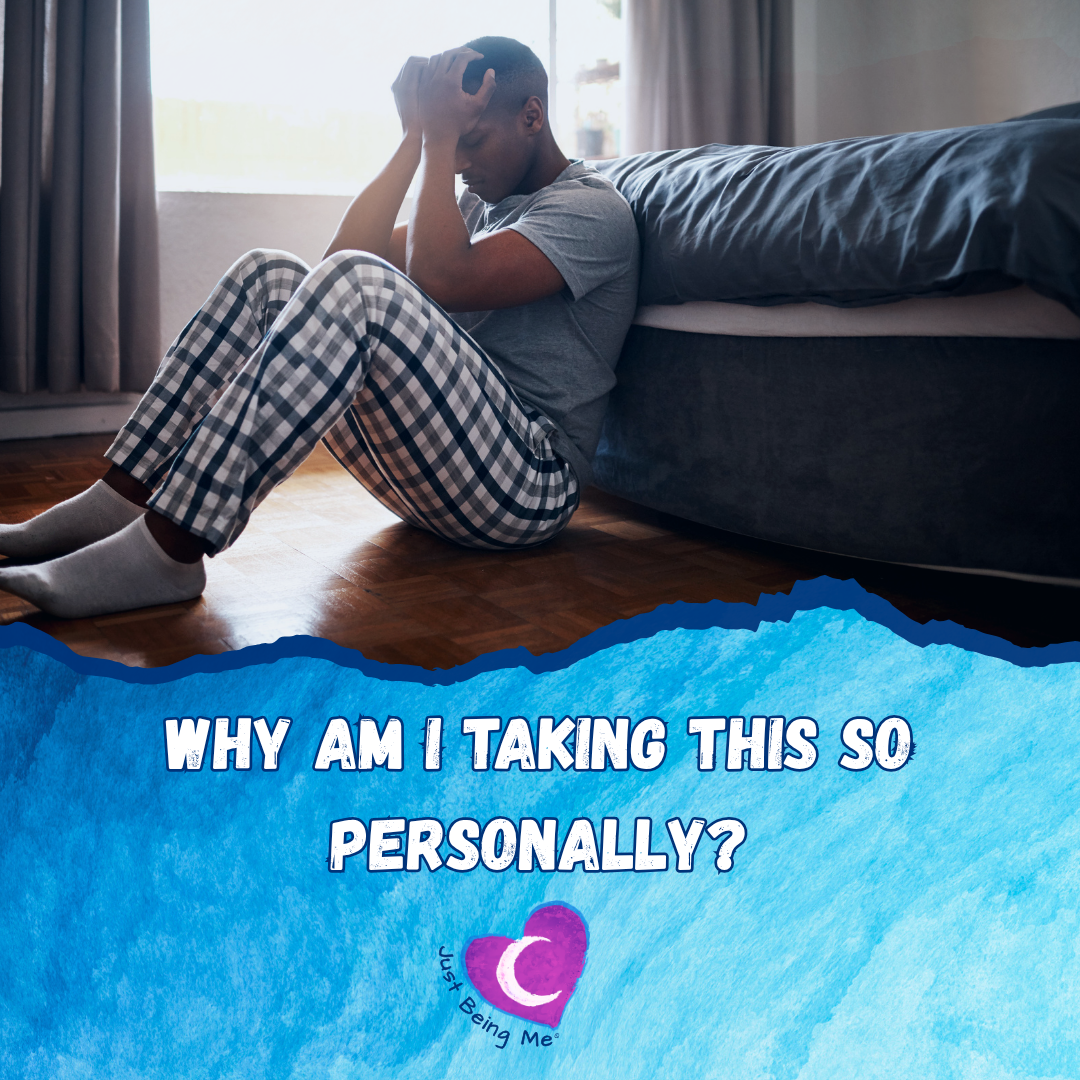
Blame 2: Why Am I Taking This So Personally?
You know when someone says something and it doesn’t just feel like a comment, a question or a concern, it feels like it says something about you?
They might ask why something happened, question a decision or point something out that doesn’t feel quite right. But your brain doesn’t hear it as one thing to look at. It hears, “I’ve done something wrong.”
And then very quickly, it can become, “What does this say about me?”
That’s the bit I want to look at in this blog, because blame doesn’t always stay with the situation. Sometimes your brain takes it straight into who you are.
So instead of, “Did I make a mistake?” it becomes, “Am I the problem?”
Instead of, “Do I need to understand something here?” it becomes, “What’s wrong with me?”
Instead of, “Is this actually mine to take responsibility for?” it becomes, “I’ve messed everything up again.”
And that’s exhausting because now you’re not just looking at what happened. You’re looking at yourself through the feeling of being blamed.
If you’re late diagnosed or late identifying as ADHD, this can be even harder to separate because you may have spent years being told you were too sensitive, too much, not listening, careless, difficult or not trying hard enough. So when blame shows up now, your brain might not hear one comment. It might hear every old moment where you felt like you were the problem.
I think this is where a lot of people lose themselves. Not in one big obvious moment, but in all the tiny moments where they make themselves wrong before they’ve even checked what’s true.
They might over-explain. They might apologise before they understand what they’re apologising for. They might become careful with every word. They might try to make sure no one can misunderstand them. They might try to be easy. They might try to be good. Or they might go the other way and become defensive, feel angry and think, “No, that’s not my fault.”
And I understand that.
Because if blame has been used around you in a way that made you feel unsafe, your brain can start treating blame as danger.
Not obvious danger. Not danger you can point at and explain easily. But danger like rejection, conflict, someone withdrawing, someone misunderstanding you or someone making you responsible for something you were not actually responsible for.
If you’ve experienced trauma, this can happen very quickly. Your brain may already have learnt that blame means conflict, punishment, withdrawal, being ignored, being shamed or having to explain yourself until you’re exhausted. So even if the situation now is different, your brain can still react as if you need to protect yourself.
So when someone blames you now, your brain isn’t going to stop and say, “Let’s look at what actually happened.”
It goes straight to, “How do I stop this?”
And one of the ways it tries to stop it is by turning the blame on yourself first.
If you can find the mistake quickly enough, maybe you can fix it. If you can work out what you did wrong quickly enough, maybe you can stop them being upset. If you can take responsibility quickly enough, maybe the connection won’t be at risk.
That might make sense as an old pattern, but it doesn’t mean it’s fair to you now.
This is why the question “Why am I taking this so personally?” matters.
Not as a way to tell yourself off. Not as a way to say you’re being too sensitive. But as a way of noticing what your brain has done with the blame.
Because sometimes someone is talking about one thing and your brain turns it into a judgement of everything you are.
They might be talking about a task, a message, a decision or a misunderstanding. But your brain hears, “You are wrong.”
Not, “This needs looking at” or “There has been a misunderstanding” or even, “We need to sort this.”
Just, “You are wrong.”
And once your brain hears that, it’s really hard to stay with the actual situation.
That’s when you might start replaying everything. You might think of all the other times people have been unhappy with you. You might agree with blame that isn’t fair just because it feels easier than sitting with someone being annoyed. You might start trying to prove you are kind, helpful, thoughtful or not difficult before you’ve even looked at whether you were responsible.
For someone who has spent years masking, people-pleasing or trying not to be seen as difficult, this can become automatic. You might not even notice you’re doing it at first. You just feel the pressure to explain, fix, defend or take the blame before you’ve had time to understand what has actually happened.
That takes a lot of energy, especially when you’ve spent years accepting responsibility for other people’s feelings, fears or reactions because for your brain it felt easier than questioning whether it was actually yours to deal with.
Because then blame doesn’t feel like one moment. It feels familiar.
It can bring back that old feeling of, “Here we go again. It’s me. I’ve done something wrong. I need to work out what it is.”
This is the point where it helps to separate the mistake from who you are.
A mistake does not mean you are the mistake.
A misunderstanding does not mean you are difficult.
Someone being upset does not automatically mean you’ve done something wrong.
Someone blaming you does not make the blame true.
That doesn’t mean you never have anything to take responsibility for. Sometimes you will. Sometimes there will be something to apologise for, something to understand or something to do differently.
But that is very different from making yourself wrong as a person.
Responsibility asks, “What happened and what is mine?”
Self-blame says, “It’s me. I’m the problem.”
They are not the same thing.
When you can start to notice the difference, you don’t have to rush straight into explaining, apologising or changing yourself. You can pause. You can look at what was actually said. You can look at what your brain heard. You can look at whether the blame is fair.
Ask yourself what they actually said, what your brain heard, what you made it mean about you and whether that is actually true.
Those questions won’t always make the feeling disappear. But they can stop you turning one moment of blame into proof that there’s something wrong with you.
And that matters.
Because you don’t have to hand your whole identity over to one uncomfortable moment.
You don’t have to decide you’re the problem just because someone else has made something feel like your fault.
You can look at the situation without making it mean everything about you.
So if something has happened recently and your brain has gone straight to, “What does this say about me?” pause for a moment.
Write down what happened. Write down what was actually said. Then write down what your brain made it mean about you.
Maybe it became, “I’m selfish,” “I’m too much,” “I always get it wrong” or “I’m difficult.”
Then ask yourself this:
Is that actually true or has my brain turned one situation into a judgement of who I am?
Because sometimes that’s where the pain is.
Not only in what happened, but in what your brain decided it meant about you.
The next time this happens, don’t try to sort the whole feeling out in your head. Talk to someone or write it down. Start with the facts first. What happened? What was actually said? Then write what your brain made it mean. That small gap matters because it helps you see whether you’re dealing with the situation in front of you or an old belief that has been brought back up. From there, you can decide what is actually yours to take responsibility for and what is not.
If this is a pattern you recognise, Continued Writing is a really good place to start. It gives your brain a sentence to finish so you can see what you’re actually thinking underneath the first reaction. Not the answer you think you should have, but the one that shows you what’s really going on. If you want to start seeing what your brain is making things mean about you, you can find my Continued Writing prompts here: https://jennyfield.co.uk/shop/