
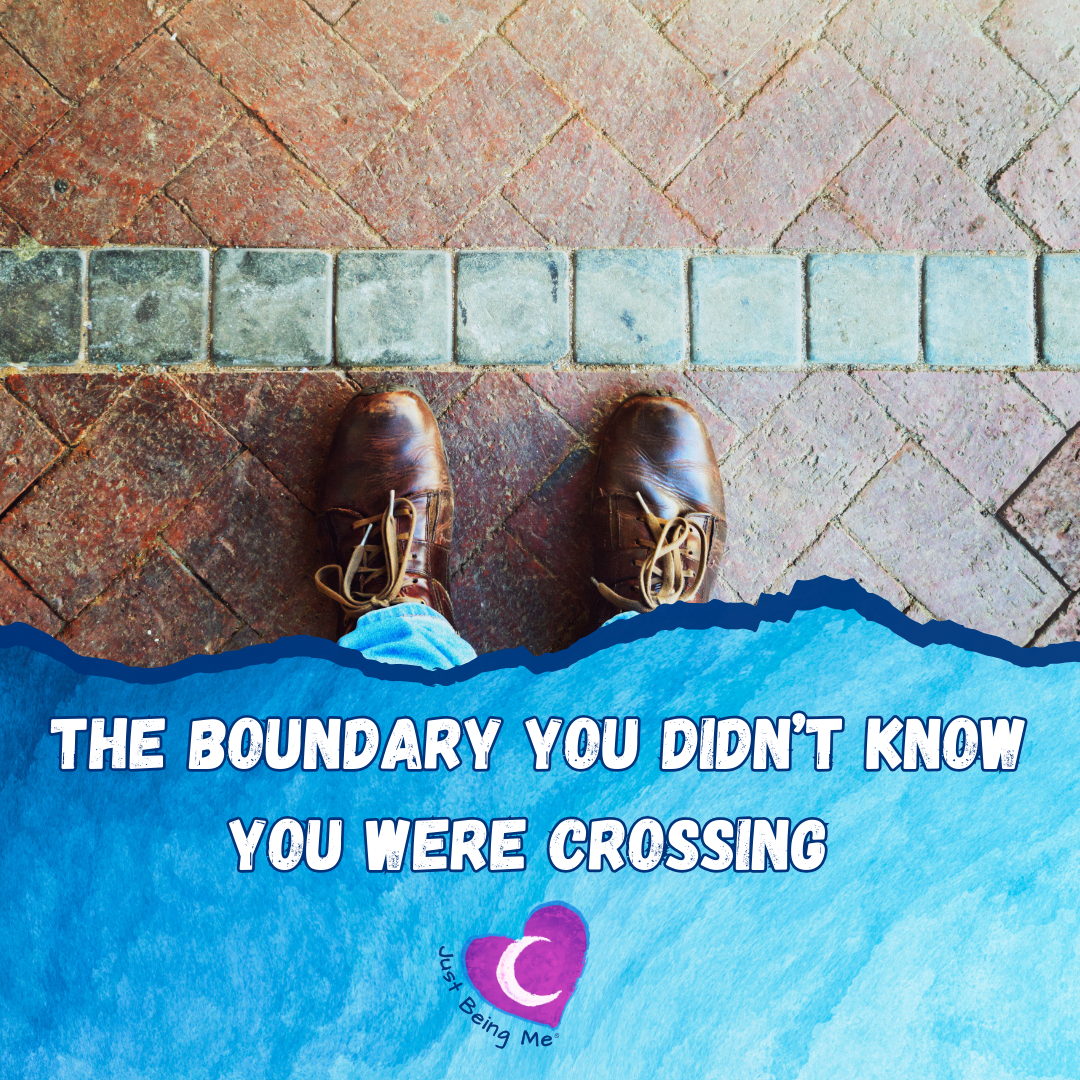
The Boundary You Didn’t Know You Were Crossing
When people talk about boundaries, they usually mean saying no.
They mean telling someone to stop.
They mean leaving.
They mean speaking up.
But most people are crossing a boundary long before that, without even realising it.
They are crossing it with themselves.
It doesn’t look like a boundary.
It looks like staying late because there is work to finish.
It looks like replying when you are exhausted.
It looks like taking responsibility because no one else is.
It looks like stepping in because you know how to fix it.
It looks like being the steady one.
And because it looks responsible, it doesn’t get questioned.
You don’t call that a boundary issue.
You call that being capable, reliable, strong, needed.
And that was me.
I was often the first in the office and the last to leave. No one told me I had to stay. No one locked the door behind me. I chose it.
I had taken on more than what was mine to take on and I told myself it was my responsibility to make it work. If something wasn’t finished, I stayed. If someone else was struggling, I absorbed it. If deadlines were tight, I worked harder. I was running on adrenaline most of the time.
I felt productive, I felt powerful, It felt like I was holding everything together but underneath that, my body was tired. For me though tired didn’t matter. What mattered was being good enough and somewhere inside of me, not finishing something on time meant I wasn’t good enough.
No one at work said that to me, it was me saying it to me and if I’m honest, it had been there for years.
When you grow up being told that other people’s moods are your fault, something changes inside of you. You begin to fix things when people aren't ok, you adjust when someone's angry and when sadness - well I absolutely believed it was my fault. But when I was young and I questioned these thoughts I was told I was being difficult. So then I had to try harder to prove that I wasn’t. I didn't argue with anything, I said yes way too much and I avoided conflict my smoothing things over in any way I could - even when it wasn't my conflict
I didn't understand that I was losing who I was, I was just trying to be good and be loved.
That’s how internal boundaries get crossed without you noticing.
Internal boundaries are usually broken without even realising it.
You feel tired and you just keep going, something doesn’t feel right and you ignore it because there's no real reason not to, you're doing to much but you still say yes
And you carry on anyway.
For years I just didn’t see it. I thought I was coping - until the day I wasn’t. I came home one evening crying and panicking saying I couldn’t go back to work.I didn't feel stressed. I was uncontrollably panicking.
It felt like I was being sent somewhere unsafe. My chest was tight. My thoughts were racing and I just wanted to run and hide. My husband said we needed the money. He didn't see the panic because I had become so good at hiding my true feelings. And I felt trapped all the feelings of guilt, that I was responsible for everything I felt like I didn't matter.
But I also knew I was past a point.
The next morning I called in sick. It was a very quick conversation because I didn't want to talk. I didn’t want space for someone to persuade me back in. I had gone in sick before because they needed me. I had pushed through before - this time I couldn’t.
After I put the phone down, the voice in my head started.
‘You’ve let them down.’
‘You’re weak.’
‘You should be able to handle this’
‘Other people manage.’
But I knew I just couldn't, so I went to the doctor and got signed off.
Part of me needed it to be official. I needed proof that I wasn’t just failing or making it up as i’d so often been told. Even then I felt relief mixed with fear. Relief because I couldn’t keep going. Fear that someone would find a way to pull me back in. Looking back now, I am able to recognise that no one had to force me to cross my boundaries. I was doing it to myself. There were evenings I could have left on time. There were moments I could have said, ‘This is too much.’ No one physically stopped me from going home. But I believed that if I didn’t keep going, it meant that I wasn’t good enough.
That belief is where the boundary was, not in the office, inside of me.
If stopping feels like failure, you will keep going long after you need to, if resting feels lazy, you will push through exhaustion, if not fixing something feels irresponsible, you will take responsibility for what isn’t yours and you will call it strength.
Most people don’t notice they are crossing their own internal boundaries until their body forces them to.
Until you can’t sleep, can’t concentrate, can’t stop crying and can’t walk back into the building. Until they are done.
But long before you are done, there are smaller moments.
Those moments where you feel tired and ignore it, the ones when you feel resentment and don't say anything.
Those moments where you feel you're doing too much but tell yourself to cope.
That is where the internal boundary is being crossed, not in one big event, in the small, repeated overrides.
You don’t need someone else to overstep you if you are already doing it to yourself.
It can be really hard to see, especially if your identity is built around being the capable one, the strong one, the one who makes everything right. But when you do start noticing the pattern, something shifts.
You become aware that you're staying late when you don’t need to.
You become aware that you're saying yes when you don’t want to.
You become aware that you're taking responsibility for something that isn’t yours.
And that awareness matters.
Because once you see that you have been breaking your own boundaries, you can’t unsee it.
You begin to question it, not from blame but from awareness.
Once you see it, you can’t pretend you don’t see it anymore and the shifts begin.