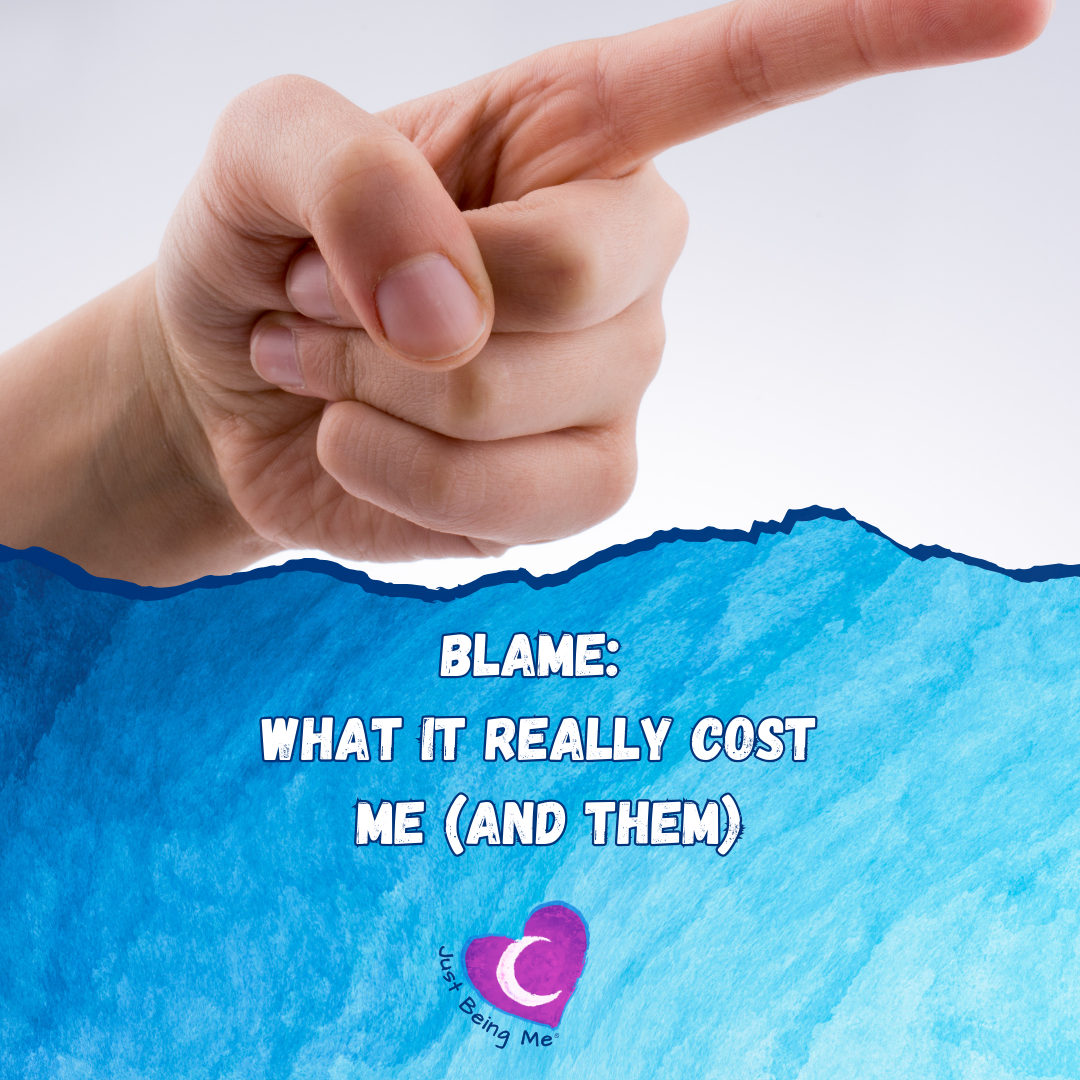
Blame: What It Really Cost Me (And Them)
Blame was one of my biggest traps.
When something hurt me, my first instinct was always to look for who was at fault.
It felt protective at the time. If I could point the finger at someone else, then it wasn’t on me. I didn’t have to feel the shame, the responsibility, or the discomfort of looking within.
But over time I started to notice what sitting in blame actually did. Not just for me, but for the people around me too.
What Blame Did For Me
Blame gave me a short burst of relief.
I could say:
- “It wasn’t me.”
- “If they hadn’t done that, I’d be fine.”
- “They made me feel this way.”
For a moment, that felt easier. But it came with a cost. Because when I blamed others:
- I handed over my power. If it was always someone else’s fault, then only they could change things. That left me stuck waiting, hoping, resenting.
- I stayed in the same cycle. Blame didn’t move me forward. It kept me replaying the same story with the same ending, over and over.
- I built walls instead of bridges. Blame created distance between me and the people I cared about. It fed conflict instead of resolution.
And worst of all, blame stopped me from looking at the one place I could change: myself.
What Blame Did For Them
When I blamed someone else, it didn’t just affect me.
- They felt attacked. Even when that wasn’t my intention, blame put them straight on the defensive.
- They shut down. Instead of opening up a conversation, they would retreat or withdraw.
- They threw blame back. We’d end up in a tug of war, pulling against each other, both wanting to be “right,” but neither of us moving forward.
Blame didn’t just hurt my relationships, it eroded trust. It taught others that when things went wrong, I’d point the finger rather than acknowledge my part in it.
Why I Stayed Stuck In Blame
Looking back, I can see that blame was often a cover-up.
It was easier to say “they made me feel this way” than it was to acknowledge what I was really feeling inside.
Sometimes, it was also a way of seeking attention. By blaming, I was really saying, “See me. Hear me. I need something here.” And yes, sometimes I got that attention, but it never filled the gap, because what I really needed wasn’t sympathy, it was responsibility.
What Changed Everything
The moment things started to shift for me was when I learned the difference between blame and responsibility.
Responsibility doesn’t mean “everything is my fault.” That’s just blame turned inward.
For me, I started to understand responsibility was about:
- Noticing my feelings without attaching them to someone else’s actions.
- Asking myself, “What can I do here? What’s actually within my control?”
- Choosing to respond instead of knee jerk react.
When I began to do this, I felt I was in control of me. I stopped waiting for others to change, and I started creating change for myself.
The Ripple Effect
When I stopped blaming, something beautiful happened.
My relationships started to feel safer.
Instead of putting people on trial, I invited them into conversation. Instead of demanding they fix my feelings, I showed them that I could hold myself and still be in a relationship with them.
That shift didn’t just change my interactions, it changed my energy. People sensed the difference. They became more open, more trusting, more willing to meet me where I was at.
Final Thought
Now I know that I used blame as armour, but it was really a cage.
It kept me locked in the same story, disconnected from others, and with no power to change.
Responsibility became my freedom. It was my way of owning my part in it, not taking responsibilities for others parts, letting them own theirs, and refusing to live life as a battle of who’s at fault.
Now, whenever I catch myself slipping back into blame, I pause and ask:
“What do I really want here, blame or change?”
Because I’ve learned the hard way: one keeps me stuck, and the other sets me free.